 Medorax
Cráneo (lámina)
Anatomía · Osteología
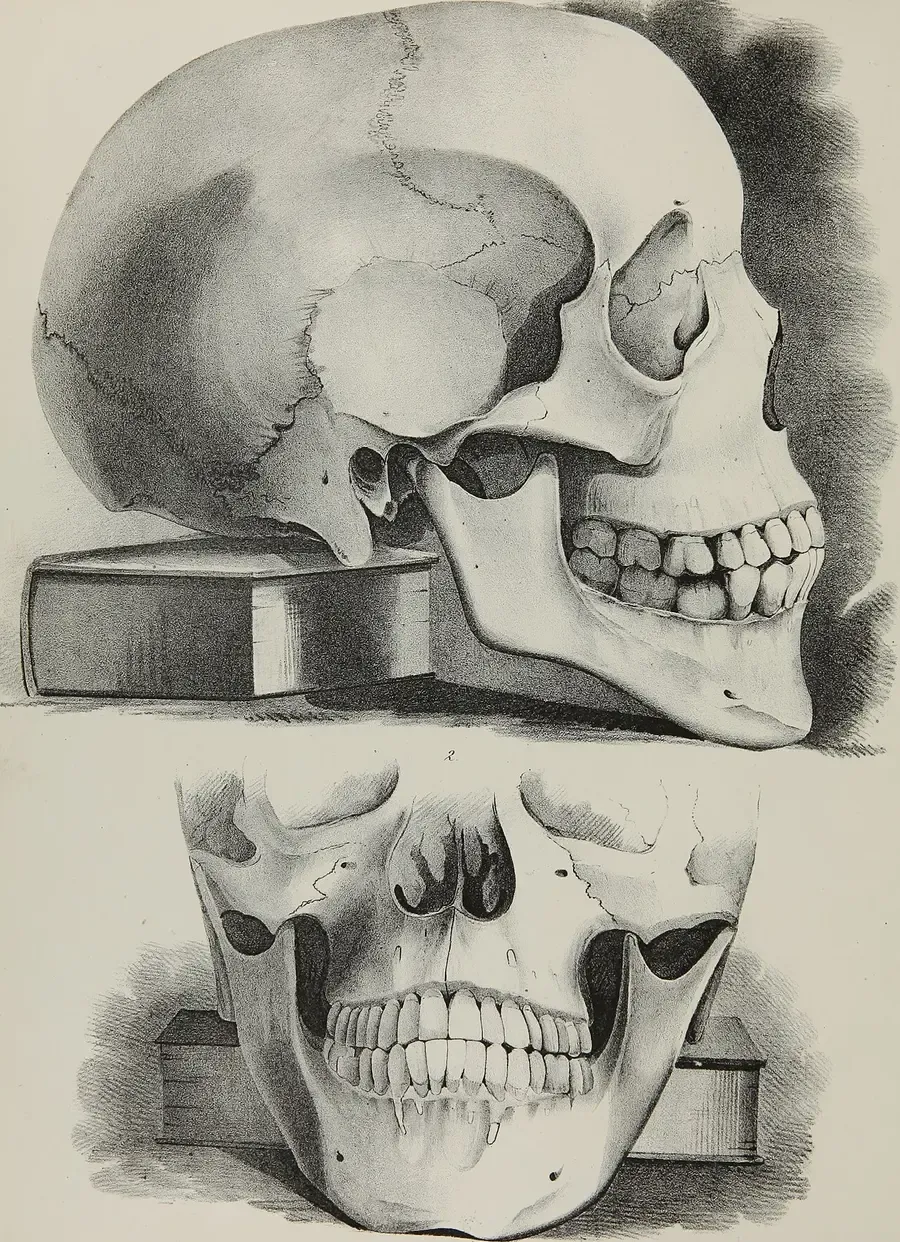
Hallazgos
Identifica los huesos del neurocráneo (frontal, parietales, temporales, occipital, esfenoides, etmoides) y de la cara (maxilar, mandíbula, cigomático, nasales), además de las suturas coronal, sagital y lambdoidea.
Interpretación
El cráneo protege el encéfalo y da forma a la cara; sus orificios (agujeros y conductos) dan paso a nervios craneales y vasos.
Perla clínica
El pterión (unión de frontal, parietal, temporal y esfenoides) es un punto débil: bajo él discurre la arteria meníngea media (hematoma epidural tras traumatismo).
Medorax es material educativo y de repaso. No es un producto sanitario, no diagnostica ni indica tratamientos, y no sustituye la formación médica reglada, las guías clínicas vigentes ni el criterio de un profesional de la salud.
- Categoría
- Osteología
- Dificultad
- media
- Tipo
- Atlas
Origen: Goddard, Paul B. (Paul Beck), 1811-1866; Parker, Joseph E; Duval, Peter S., 1804 or 5-1886, lithographer; Foote, Albert · No restrictions · Wikimedia Commons · Licencia No restrictions
Descargar Medorax